

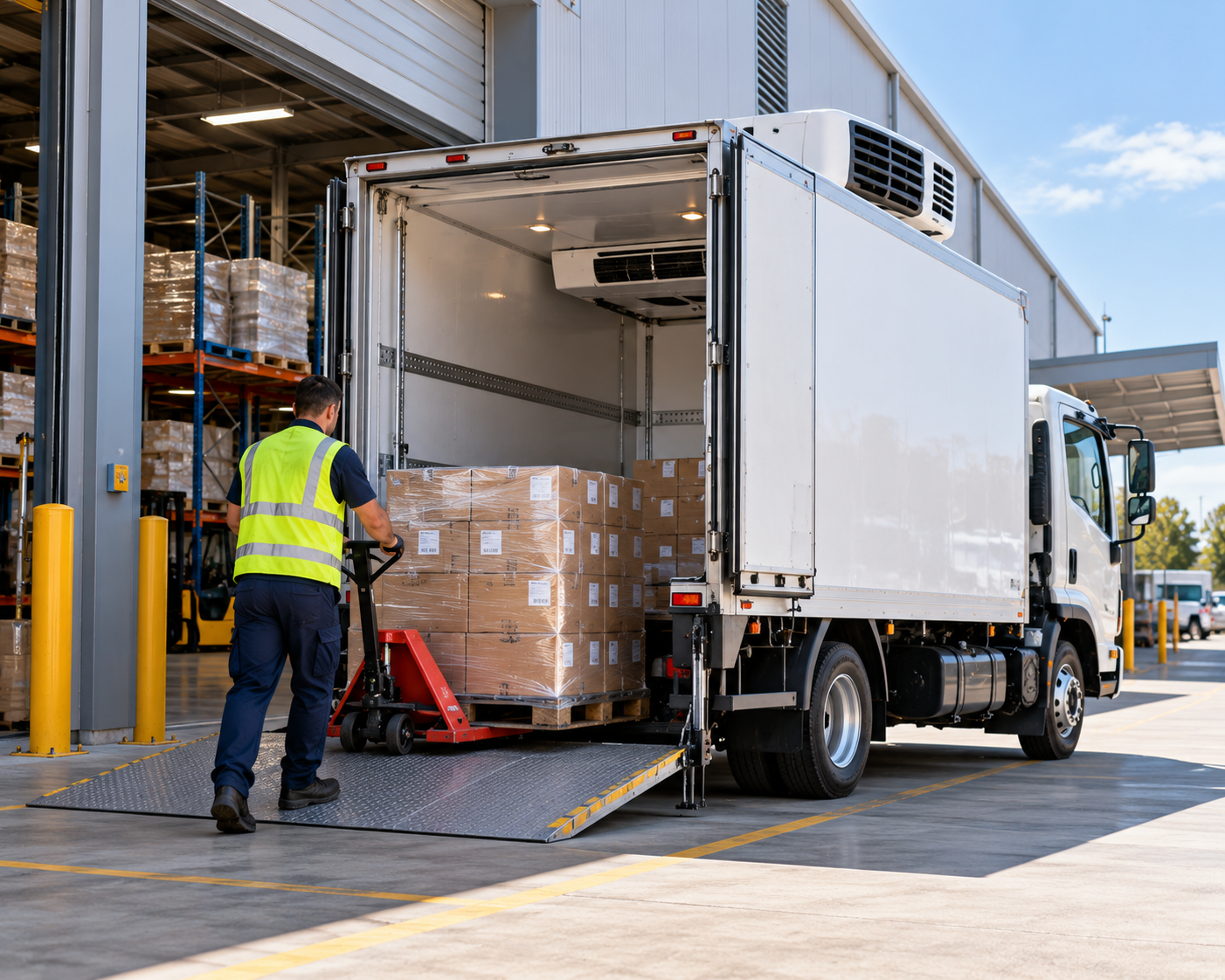
In 2026, freight has become difficult to separate from foodservice cheese pricing. A price change can reflect pressures elsewhere in the supply chain, even when the cheese itself has not changed. Those freight pressures can enter the cost structure at two points: upstream, where transport affects ingredients, packaging and other production inputs, and downstream, where warehousing, distribution and final delivery shape the price a foodservice operator pays.
Australian Bureau of Statistics data show road freight transport prices rose 15.5% in the June 2026 quarter, the largest quarterly increase since the series began in 1997, and were 17.6% higher over the year. The ABS linked much of the quarterly increase to stronger fuel surcharges, showing how quickly fuel-related cost hikes can feed through to road freight pricing.
Upstream freight is less likely to appear as a separate line item because transport costs on ingredients, packaging and other production inputs are included in the manufacturer’s overall cost base. Once finished foodservice cheese enters warehousing and distribution, freight can appear more explicitly in the commercial arrangement, whether through a delivered price, a separate freight charge or a fuel surcharge. Freight costs can therefore influence cheese pricing differently depending on where in the supply chain they are incurred.
Where freight and delivery are charged separately, the carton or kilogram price alone does not show what the cheese will ultimately cost. A lower base price may lose its advantage once regional delivery charges, fuel surcharges or other freight costs are included. This distinction is particularly relevant where one supplier quotes a delivered price and another separates product and freight.
ABS data also show that freight and delivery costs were a significant contributor to higher operating expenses across foodservice. Among Accommodation and Food Services businesses that reported higher operating expenses in June 2026, 83% cited freight or delivery costs as a contributing factor. However, the impact is not uniform across operations because freight costs can vary by route, location and delivery profile.
For multi-site operations, those differences can become significant when locations sit across different delivery routes or distribution areas. A metropolitan kitchen supplied through an established distribution route may have a different delivery cost from a regional site requiring a longer or less frequent run. The same cheese specification can cost more to supply to some locations than others, depending on the distributor or delivery route.
Delivery frequency can further influence the freight cost for each location. When freight charges depend on order volume or minimum-order requirements, smaller, more frequent deliveries can increase the freight cost per carton. Larger drops can spread fixed delivery costs across more cartons, although that advantage narrows where additional stock creates greater storage demand or leaves less usable shelf life by the time it is used. Two sites purchasing the same annual volume can therefore carry different freight costs per carton simply because their delivery profiles differ.
How freight-related price changes are applied becomes more important when freight costs are volatile. Changes in freight costs can appear in a supplier’s pricing in several ways, including temporary fuel surcharges, separate freight adjustments or being built into the delivered price. The adjustment structure affects whether an increase remains clearly identifiable as temporary, applies only to particular locations or becomes part of the ongoing product price. A separate surcharge makes the freight component easier to identify if conditions later change.
The distribution model a wholesale dairy supplier uses can also influence the freight cost attached to each location. Metro and regional coverage, distributor hand-offs, delivery zones and minimum-order settings can all affect what it costs to move the same cheese specification through the network. As a result, a multi-site foodservice operator may face different freight costs by location even when the product itself and its base price remain unchanged.
Freight volatility can make cheese prices less predictable, particularly when freight and delivery charges change while the cheese specification remains the same. The final price can reflect upstream transport, distribution structure, site location, delivery frequency and how freight-related cost increases are applied. Separating those components gives procurement teams a clearer view of whether a price change originates in the product itself or in the logistics required to move it through the network.
When your cheese price changes, can you tell how much comes from the product itself and how much from getting it to your kitchens?