

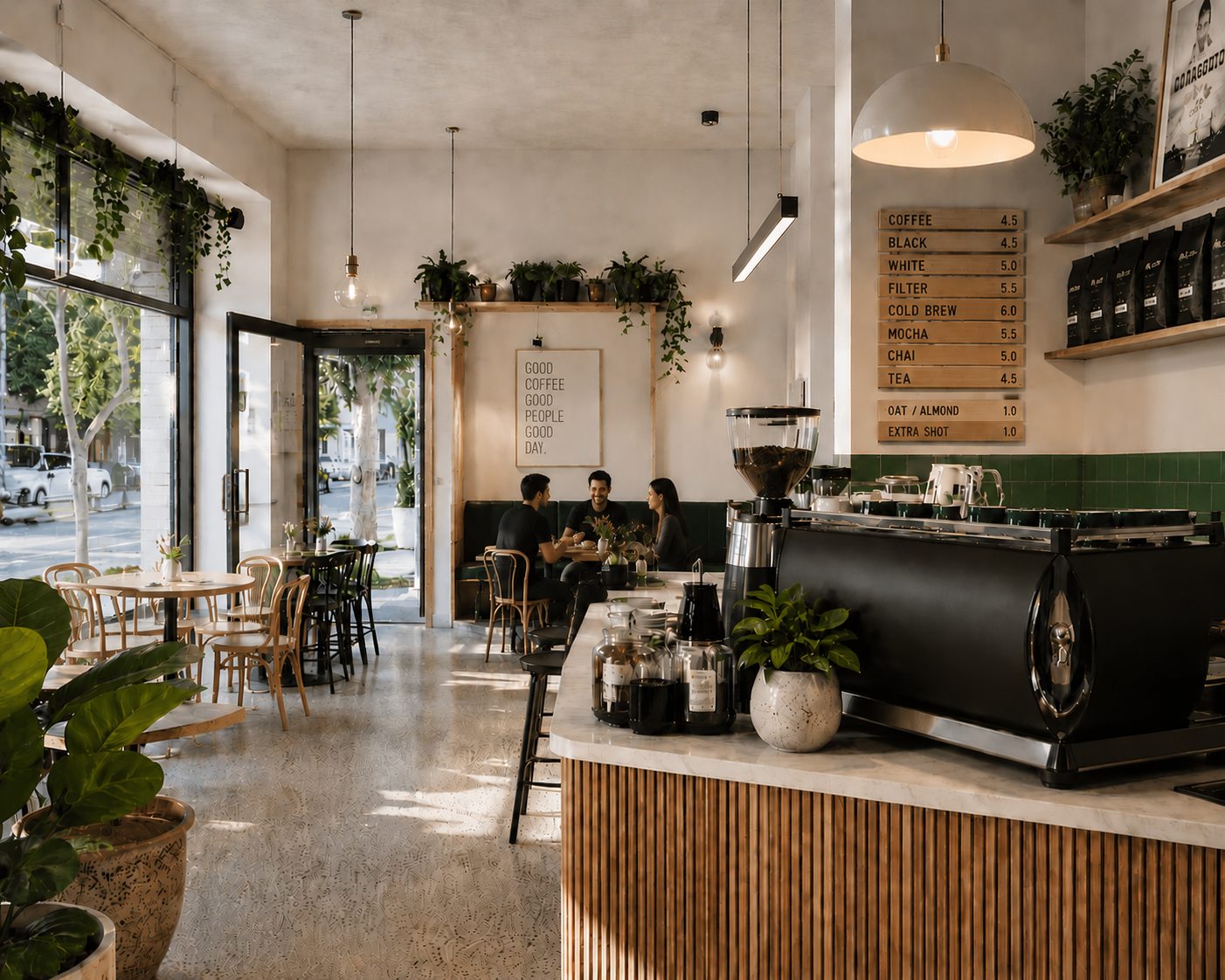
The Australian café culture has changed considerably over the past decade and the pace of that change has not slowed. What was once a relatively contained operation centred around coffee service and a predictable food offer has evolved into a broader kitchen operation running across multiple dayparts and locations. As menus expand, dairy suppliers are expected to support a wider range of operational demands across all-day dining, grab-and-go service and higher-volume lunch offerings.
Customer expectations have evolved alongside those operational changes and operators have invested accordingly in menu quality, equipment and team capability. What has not always evolved at the same pace is the dairy specification supporting those menus. Procurement decisions that once supported a simpler operation are often still being applied across applications that require fundamentally different outcomes, creating operational friction that rarely gets traced back to its source.
Different Applications Demand Different Dairy Performance
For a long time, dairy requirements in many café kitchens were relatively straightforward: milk for coffee, standard butter and perhaps a single cheese product used across multiple menu items. That approach becomes harder to sustain as menus broaden.
Dine-in brunch service and grab-and-go lunch items may all rely on the same dairy category, but they often place very different demands on product performance. Hot-hold breakfast service may prioritise consistency across holding temperatures during high-volume service. Toasties place greater emphasis on melt behaviour, texture and visual presentation, while bakery products may depend more heavily on consistency through cooking and preparation.
These differences are not minor product variations. They influence kitchen efficiency, preparation adjustments and the consistency customers experience during service. Operators aligning dairy specifications with menu occasions are not complicating a purchasing decision; they are matching product performance to how the kitchen actually operates.
Labour Pressure Is Redefining What Format-Ready Means
Finding experienced kitchen staff remains a challenge across Australian hospitality, and many cafés have adjusted by reducing preparation wherever they can. Tasks that once sat naturally within kitchen routines now compete with faster service expectations and smaller teams. Under those conditions, products that require additional preparation or continual adjustment begin to place pressure on already busy kitchens.
Pre-shredded cheese, portioned butter and sliced cheese products are often viewed as convenience formats, but their role inside service can be broader than that. Removing a preparation step before a morning rush, reducing manual portioning during service or limiting additional handling can make a noticeable difference when fewer people are managing the greater workload.
The cost of products that require extra handling or force staff to compensate for inconsistent performance rarely appears in a simple price-per-kilo comparison. More often, it surfaces through preparation time, product waste and the small inefficiencies that gradually build over a week of service.
The Scaling Problem: When Inconsistency Multiplies
As café groups expand beyond a single site or increase menu complexity, operational inconsistencies become more difficult to absorb. Small variations in melt performance, portion yield or product handling that may be manageable in a single venue can quickly create broader execution problems when repeated across multiple locations, larger teams or faster service environments.
Customer expectations also become harder to manage as businesses scale. Meals that perform differently between visits, even in subtle ways, can affect how customers perceive overall quality and reliability. In that environment, dairy specification becomes less about individual product preference and more about creating repeatable systems that kitchens can execute consistently regardless of location, staffing mix or service pressure.
For growing café operations, consistency increasingly supports more than kitchen efficiency alone. It helps operators train staff faster, maintain menu standards more reliably and reduce the operational variation that tends to increase as businesses become more complex.
Supplier Relationships Are Becoming More Functional
As café operations become broader and more complex, supplier expectations are changing alongside them. Reliability, specification transparency and batch consistency are becoming operational requirements rather than purchasing preferences as operators build menus around expected product performance.
We continue to see situations where suppliers respond to market pressure by adjusting blends or changing specifications to manage costs. While those decisions may resolve immediate supply challenges, the consequences often play out in the kitchen, where teams suddenly find themselves adapting to outcomes they did not expect. The cost is rarely obvious at first. It appears slowly through inconsistent preparation, continual adjustments, slower execution and declining customer experience.
For suppliers supporting growing café operations, consistency is now an operational requirement, not just a product attribute. Operators need specifications they can confidently build menus around, rather than products that require kitchens to adjust continually.
Modern café culture now stretches far beyond coffee-led service. All-day brunch, cabinet food, dine-in lunch service and convenience-led takeaway options have created broader demands across the kitchen.
As operators expand menus and venues, and manage increasingly lean kitchen teams, supplier decisions begin to influence much more than procurement efficiency alone. Dairy performance can affect preparation flow, menu consistency, training requirements and the ability to deliver the same customer experience across every service period and locations.
The question is no longer simply whether a supplier can consistently provide products, but whether those products have been designed for how cafés actually work.
As café operations continue to evolve, are we choosing dairy suppliers based on what they deliver today or on how effectively they can support the menus and kitchens we are building for tomorrow?