

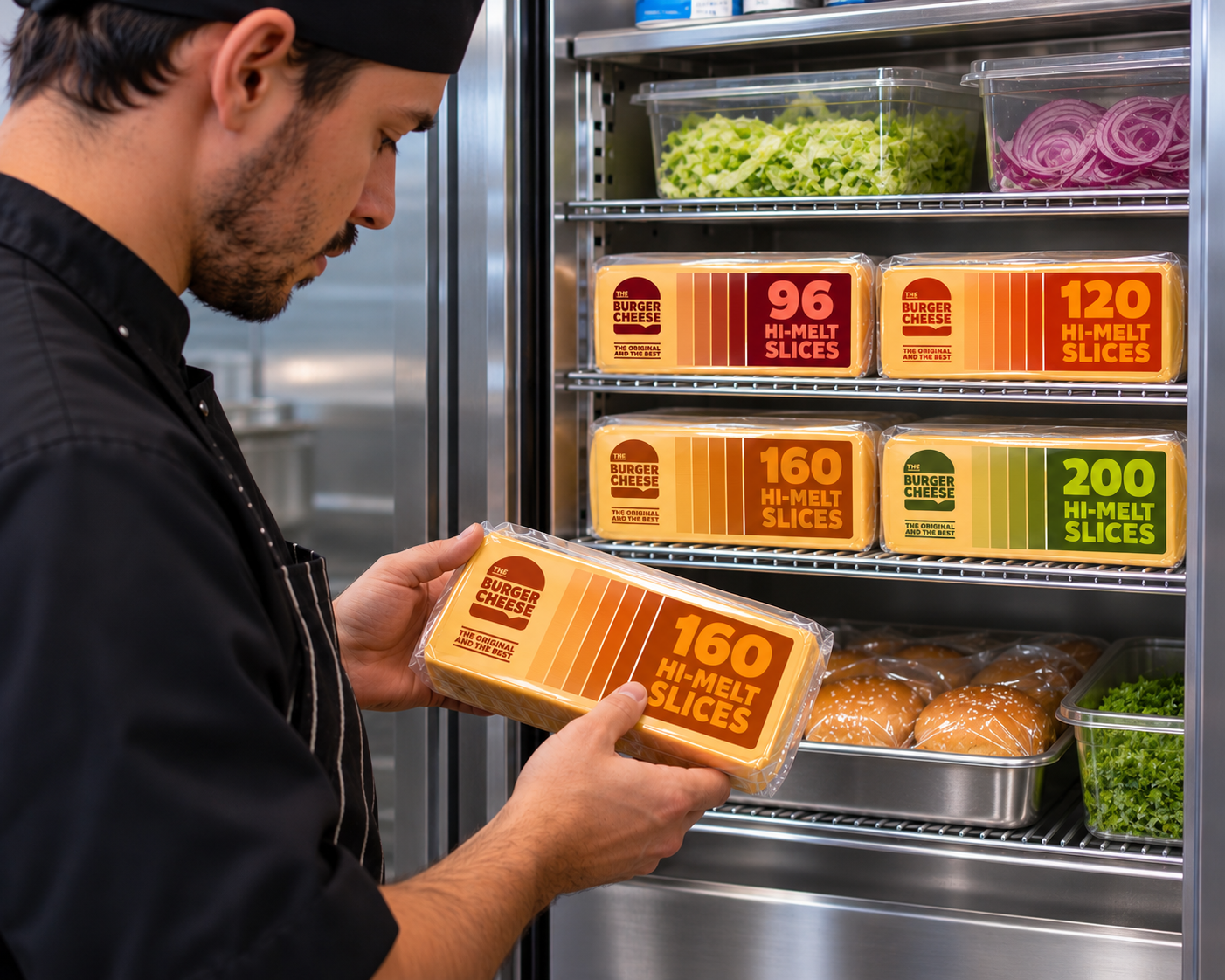
High-volume burger kitchens buy dairy in bulk to reduce order frequency, freight costs and administrative overhead. That logic works only if the stock clears within its usable window. A bulk order that looks efficient on a purchase order can still leave a kitchen with more product than it can use in time, and that mismatch between order volume and ingredient shelf life often becomes visible only when slow-moving stock starts building up in the cold room.
Margin pressure across Australian foodservice has increased the appeal of larger, less frequent orders where storage and usage rates allow it. For high-throughput burger businesses, that can mean ordering greater volumes of core lines such as hi-melt burger cheese slices to reduce delivery frequency and improve purchasing efficiency. The value of that approach, however, depends on whether each kitchen can use the stock within the shelf life available after delivery.
Shelf life also needs to be considered at site level because stock usage can vary significantly across a multi-site burger operation. A high-volume location may move through several cases of cheese within a short period, while a quieter store may take considerably longer to use the same amount of product. Each site therefore needs an order quantity and delivery frequency that reflect its own consumption rate and the shelf life remaining when stock arrives. Using network-wide averages to guide purchasing can obscure those differences and increase the risk of either excess stock or unnecessary replenishment at individual locations.
For procurement, shelf life is not simply the time period printed on the case. What matters operationally is how much of that shelf life remains when the product reaches the kitchen, because that is the window available for the site to use the stock. A product may have a long total shelf life from manufacture, but part of that period has already passed through production, warehousing and distribution before delivery. The useful figure for bulk ordering is therefore the remaining shelf life available on arrival.
From there, procurement can work out how much stock each site can realistically use before the next order is due. This means comparing the available shelf-life window with how quickly the site normally moves through the product, rather than basing order volume on unit price or network-wide demand alone. In practice, four variables have the greatest influence on how much stock a kitchen can reasonably take at one time:
- Average site consumption shows how many packs the kitchen is likely to use during the available shelf-life window.
- Delivery frequency determines how much stock the kitchen needs to hold between deliveries, which can make a larger order unnecessary even when the product has ample shelf life remaining.
- Pack size also needs to reflect site usage, particularly where slower-moving locations may not use a full carton within the available shelf life.
- Promotions, seasonal demand and menu changes also affect consumption and should be reflected in order volumes.
Together, these factors give procurement a clearer basis for setting order quantities around actual site usage rather than assumptions. The calculation is only useful, however, if the shelf-life information is provided before the order. Procurement needs to know the minimum remaining shelf life expected at delivery and the pack size. Those figures can then be considered alongside each site’s usage rate and delivery schedule to determine how much product it can realistically use within the available shelf life.
For multi-site operators, the advantage comes from standardising the product without necessarily standardising the quantity held at every location. Central procurement can work from the same cheese specification across the group while adjusting par levels and delivery volumes to suit each site’s turnover. Wholesale dairy suppliers supporting multi-site burger operations need to provide clear information on remaining shelf life, pack sizes and available delivery options so procurement can plan order quantities accurately for each location.
Shelf life should be considered alongside price when assessing the value of a bulk order. A lower unit price only delivers a genuine saving if the kitchen can use the full quantity before the available shelf life runs out. For high-volume burger operations, the best order volume is one that improves purchasing efficiency without leaving individual sites with more stock than they can realistically use.
Are your dairy orders based on how much each site can use within the available shelf life, or is shelf life only being considered after the stock arrives?